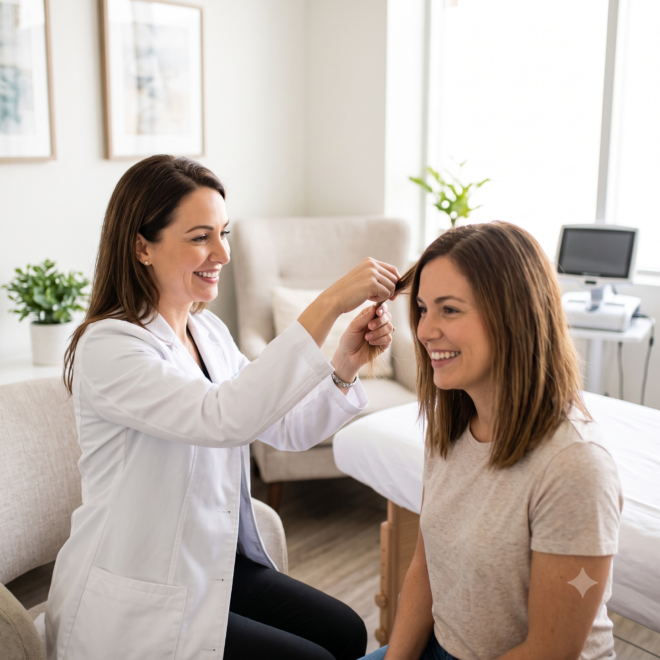
Hair shedding is normal, but excessive shedding may signal an underlying problem. One of the quickest ways healthcare providers assess active hair loss is with a hair pull test. This simple examination helps determine whether you are losing more hair than expected and whether additional testing is needed. While the hair pull test cannot diagnose…
Hair loss can be frustrating, especially when you notice more hair in your brush, shower drain, or pillow. One of the most common questions people ask is: can hair grow back after hair loss? The answer is often yes, but it depends on the cause, how long the hair loss has been present, and whether…
Healthy hair begins at the scalp. While many people focus on shampoos, supplements, and styling products, the condition of the scalp can also influence the environment where hair follicles grow. When the scalp is irritated, inflamed, excessively oily, very dry, or affected by conditions such as dandruff, hair growth may be affected. Understanding the connection…
Complete Guide to Non-Surgical Hair Restoration Hair loss can affect confidence, appearance, and overall well-being. The good news is that many people experiencing early to moderate hair thinning do not need surgery to improve hair growth. Thanks to advancements in dermatology, several evidence-based treatments can stimulate dormant hair follicles, strengthen existing hair, and slow further…
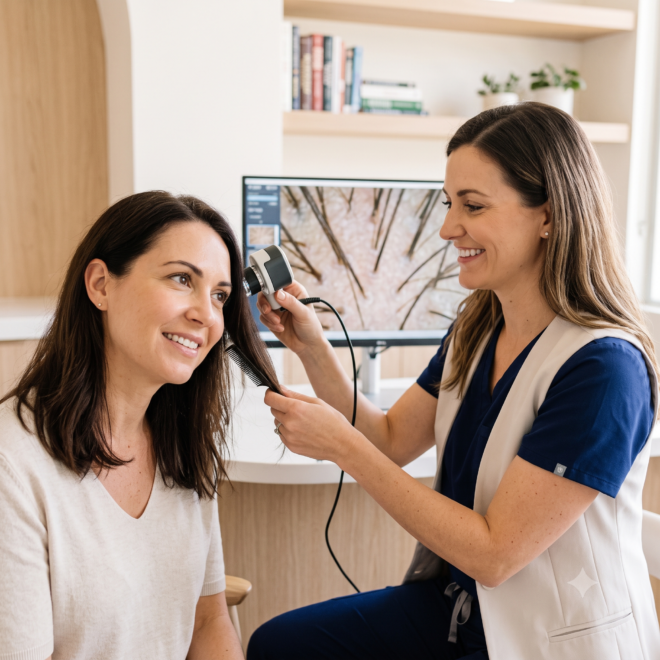
“`html Hair Analysis for Hair Loss: Find the Root Cause Before Treatment Hair loss is not a diagnosis—it is a symptom. Two people can experience similar thinning but have completely different underlying causes. One may have inflammation, another hormonal changes, while a third may have nutritional deficiencies or genetic hair loss. That is why a…