

“`html
Hair Analysis for Hair Loss: Find the Root Cause Before Treatment
Hair loss is not a diagnosis—it is a symptom. Two people can experience similar thinning but have completely different underlying causes. One may have inflammation, another hormonal changes, while a third may have nutritional deficiencies or genetic hair loss. That is why a professional hair analysis for hair loss is one of the most valuable first steps before starting treatment.
At PURE Medical Spa, every patient begins with a physician-led evaluation because treating hair loss without identifying the cause often leads to frustration and unnecessary expenses. A detailed hair analysis helps determine why your hair is changing and which treatment is most likely to help.
Book your FREE Hair Restoration Consultation with PURE Hair ReGrow today.
Why Hair Analysis Matters
Many people begin treatment after noticing increased shedding, a widening part, or a receding hairline. However, these visible changes only tell part of the story.
A comprehensive hair loss diagnosis examines both the scalp and the hair follicles to identify what is happening beneath the surface.
A professional evaluation may answer questions such as:
- Is inflammation affecting the follicles?
- Is thinning temporary or hereditary?
- Are follicles dormant or permanently damaged?
- Is scalp disease contributing to hair loss?
- Is treatment likely to restore density?
Rather than guessing, physicians collect objective information before recommending therapy.
What Can a Hair Analysis Detect?
Patients frequently ask, what can a hair analysis detect?
A physician-led scalp analysis may identify:
- Early follicle miniaturization
- Diffuse thinning
- Pattern hair loss
- Scalp inflammation
- Excess oil or buildup
- Dry scalp
- Follicle blockage
- Reduced hair density
- Broken hairs
- Signs of scarring conditions
- Hair shaft abnormalities
Many of these changes develop long before obvious bald spots appear.
Detecting Scalp Inflammation Early
One of the biggest advantages of a professional scalp analysis is identifying inflammation before permanent follicle damage occurs.
Inflammation may result from:
- Seborrheic dermatitis
- Psoriasis
- Folliculitis
- Autoimmune disorders
- Allergic reactions
- Scarring alopecia
Persistent inflammation can interfere with normal follicle function and may contribute to progressive hair loss.
For some patients, scalp inflammation treatment becomes the first step before any hair-growth therapy is considered.
The American Academy of Dermatology explains that inflammatory scalp conditions should be diagnosed and managed early to reduce the risk of permanent follicle damage.
Source: https://www.aad.org/public/diseases/hair-loss
Hair Analysis for Hair Loss Causes
A professional hair analysis for hair loss causes looks beyond the visible hair.
During your evaluation, a provider may review:
- Medical history
- Family history
- Recent illnesses
- Medications
- Pregnancy or menopause
- Weight changes
- Stress levels
- Hair care practices
- Nutritional concerns
This information helps determine whether thinning is caused by genetics, hormones, inflammation, nutrition, medications, or another condition.
Scalp Analysis for Thinning Hair
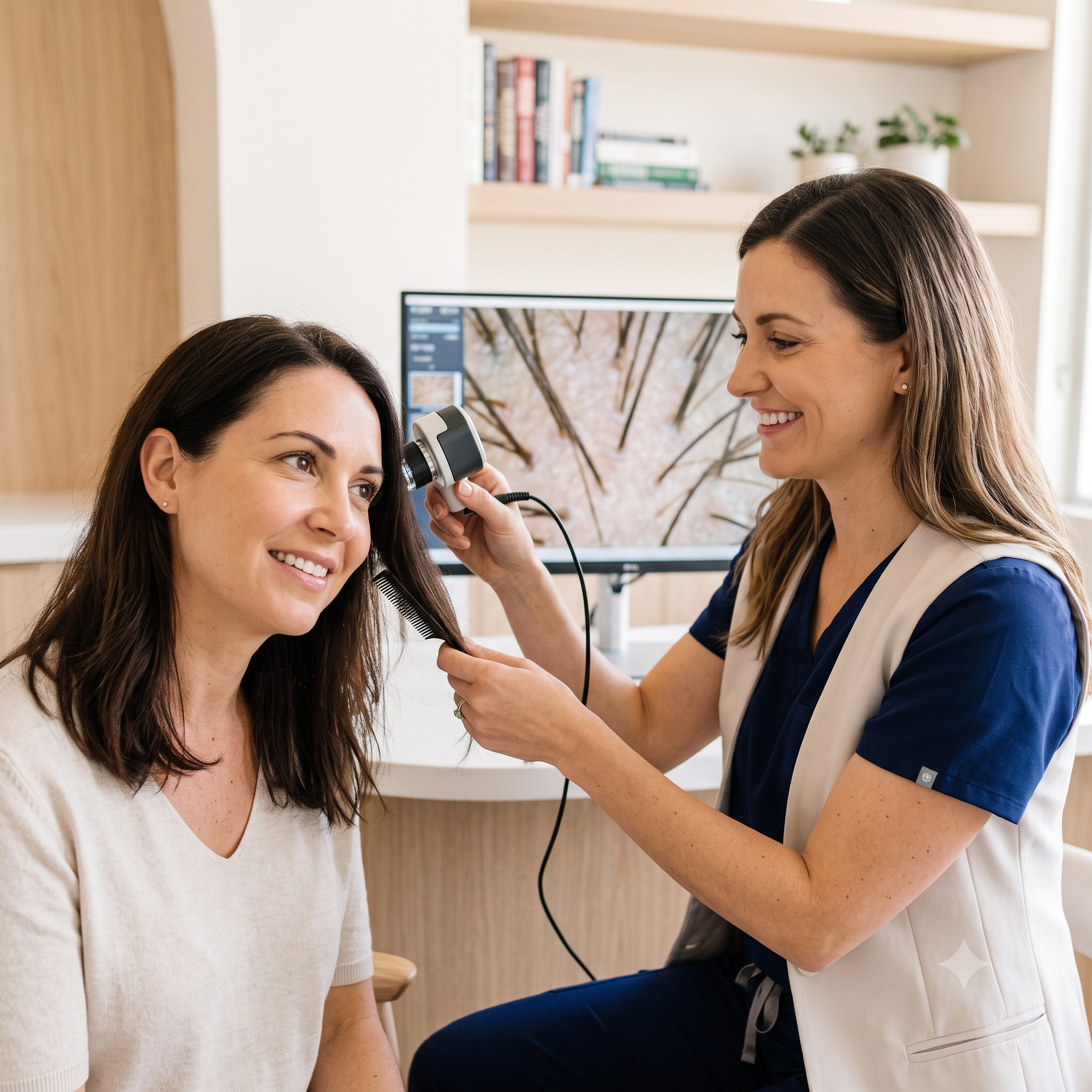
A scalp analysis for thinning hair may include digital magnification to examine individual follicles and hair shafts.
The provider may evaluate:
- Hair shaft diameter
- Hair density
- Follicle miniaturization
- Hair growth pattern
- Scalp redness
- Scaling
- Follicular openings
- Signs of irritation
These findings help distinguish temporary shedding from progressive hair loss.
Hair Loss Diagnosis Comes Before Treatment
Many patients search online for products before receiving a proper hair loss diagnosis.
Unfortunately, oils, shampoos, vitamins, and supplements rarely solve every type of hair loss.
A physician-led evaluation helps determine whether you may benefit from:
- Medical therapy
- PRP
- Regenerative treatment
- Hair regrowth treatment
- Scalp therapy
- Lifestyle changes
- Hair transplant consultation
Treating the cause instead of the symptom generally produces better long-term outcomes.
Hair Loss Treatment for Women and Men
Hair loss does not affect everyone the same way.
Hair loss treatment for women often focuses on diffuse thinning, hormonal changes, postpartum shedding, or female pattern hair loss.
Hair loss treatment for men commonly addresses androgenetic alopecia, crown thinning, and receding hairlines.
Although some therapies overlap, treatment plans should always be personalized rather than identical.
Scalp Health Assessment
Healthy hair begins with a healthy scalp.
A complete scalp health assessment evaluates whether the scalp environment is supporting normal follicle function.
Your provider may examine:
- Hydration
- Oil production
- Inflammation
- Sensitivity
- Scalp buildup
- Circulation
- Hair density
- Hair growth patterns
Correcting scalp conditions often improves the effectiveness of other hair restoration treatments.
Why a Professional Hair Analysis Matters
- The best hair thinning treatment starts with identifying the exact type of hair loss, whether it’s male pattern baldness, female pattern hair loss, patchy hair loss, or another medical condition.
- During a hair loss consultation, your provider may review your medical history, recommend blood tests, and assess factors contributing to hair loss, including hormonal imbalances and medication side effects.
- A comprehensive scalp health assessment helps detect inflammation, scarring alopecia, and other conditions before selecting treatment.
- Depending on your diagnosis, medical treatments may include topical minoxidil, oral medications, regenerative therapies, or other treatments designed to stimulate hair growth.
- Clinical research shows that matching treatment to the specific form of hair loss provides better outcomes than using the same approach for every patient.
How a Hair Analysis Helps Diagnose Hair Loss
Many patients ask how a hair analysis helps diagnose hair loss.
Rather than relying on photographs alone, physicians combine:
- Clinical examination
- Medical history
- Pattern recognition
- Digital scalp imaging
- Hair density measurements
- Laboratory testing when appropriate
This process provides a much more accurate diagnosis than self-assessment.
Choosing the Best Hair Analysis for Hair Loss Treatment
The best hair analysis for hair loss treatment is one performed by a provider experienced in diagnosing different forms of hair loss.
At PURE Medical Spa, the evaluation may include:
- Digital scalp imaging
- Hair density measurements
- Follicle assessment
- Medical review
- Personalized treatment recommendations
- Long-term monitoring
This diagnosis-first approach helps ensure patients receive appropriate care instead of unnecessary treatments.
PURE Hair ReGrow Consultation
The PURE Hair ReGrow consultation is designed to identify the reason for your thinning before treatment begins.
Your appointment may include:
- PURE Med Spa hair analysis
- PURE Med Spa scalp analysis
- Hair density evaluation
- Scalp health assessment
- Hair loss diagnosis
- Treatment planning
- Progress tracking
Whether you need PURE Med Spa hair loss treatment, scalp therapy, regenerative procedures, or simply reassurance that your shedding is temporary, your care begins with understanding the cause.
Book Your Hair Analysis
If you have noticed increased shedding, thinning hair, or changes in your scalp, don’t wait until the problem becomes more advanced.
Call/Text: 312.312.7873
Or schedule your FREE complimentary telehealth consultation to learn whether an in-person scalp evaluation is recommended.
Learn more about PURE Hair ReGrow.
Frequently Asked Questions
What can a hair analysis detect?
A hair analysis may identify inflammation, follicle miniaturization, scalp disease, reduced hair density, and early signs of hereditary hair loss.
How does a hair analysis help diagnose hair loss?
It combines scalp imaging, medical history, and clinical examination to identify the underlying cause of thinning.
Is scalp analysis helpful for thinning hair?
Yes. Digital scalp analysis can detect changes before visible baldness develops.
What is the best hair analysis for hair loss treatment?
A physician-led evaluation that includes scalp assessment, follicle analysis, and personalized treatment planning provides the most comprehensive information.
Can scalp inflammation cause hair loss?
Yes. Persistent scalp inflammation can interfere with normal follicle function and may contribute to temporary or permanent hair loss if left untreated.
Research Sources
- American Academy of Dermatology – Hair Loss Overview
https://www.aad.org/public/diseases/hair-loss - American Academy of Dermatology – Hair Loss Diagnosis & Treatment
https://www.aad.org/public/diseases/hair-loss/treatment/diagnosis-treat - NCBI – Hair Disorders: Diagnosis and Management
https://www.ncbi.nlm.nih.gov/books/NBK470434/ - Clinical Review – Scarring Alopecia
https://pmc.ncbi.nlm.nih.gov/articles/PMC3855115/ - Clinical Review – Hair and Scalp Disorders
https://pmc.ncbi.nlm.nih.gov/articles/PMC6369642/
“`