

Not everyone has thick hair at the back of the head. If your hair is already thin, you may wonder whether a hair transplant is possible. The encouraging news is that thin donor hair does not always rule out treatment, although the amount and quality of available hair matter a great deal.
If you are considering NeoGraft with thin donor hair, understanding your donor area is the first step toward choosing a safe plan. Learn more about NeoGraft FUE hair restoration at PURE.
Key Takeaways
- ✓A transplant moves existing hair; it cannot create new donor follicles.
- ✓People with fine hair may still qualify when enough stable follicles remain.
- ✓Very low donor density can limit how many grafts can be moved safely.
- ✓Start with a hair restoration consultation.
Can NeoGraft Work With Thin Donor Hair?
A NeoGraft hair transplant uses follicular unit extraction (FUE) to move healthy follicles from one part of the scalp to another. These follicles usually come from the back or sides of the head, where hair tends to be more resistant to pattern hair loss.
Because hair transplantation moves existing hair rather than creating new follicles, NeoGraft with thin donor hair depends on having enough healthy follicles to share. People with fine hair may still qualify, while those with very low donor density may have more limited options. Our NeoGraft FUE overview explains how the procedure works.
Why Does Donor Hair Density Matter?
Hair density means how many follicles grow in a given area of your scalp. During a hair transplant with low donor density, removing too many follicles may leave the donor area looking thinner. Research on FUE stresses careful donor assessment for exactly this reason, and a proper exam helps determine how much hair can be moved safely.
NeoGraft Donor Hair Requirements: What Matters?
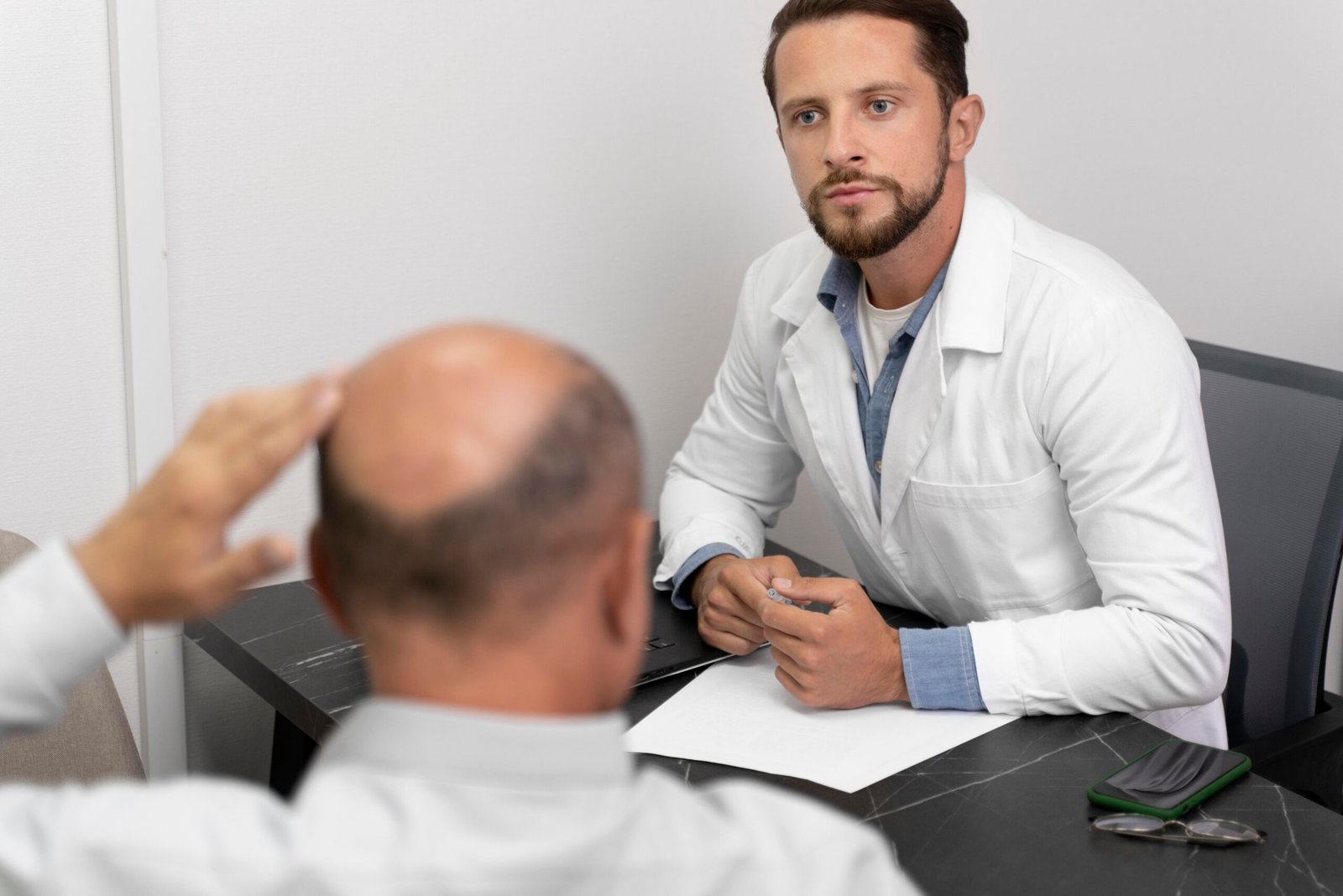
Several factors help determine whether NeoGraft with thin donor hair is a realistic option. Your provider reviews each one during a medical assessment, often with magnified imaging. Learn how digital scalp imaging supports this step.
| Factor | What it means | Why it matters |
|---|---|---|
| Donor density | How many follicles grow per area at the back and sides. | Enough must remain after extraction to avoid visible gaps. |
| Hair thickness | The width of each individual hair. | Thicker strands give more coverage per graft; fine hair needs careful planning. |
| Hair loss pattern | Whether thinning reaches into the donor zone. | Unstable donor hair may thin again after it is moved. |
| Scalp health | Inflammation, scarring or active conditions. | These can affect graft survival and healing. |
Is an FUE Hair Transplant for Thin Hair Possible?
An FUE hair transplant for thin hair may be possible when enough stable donor follicles remain. The goal is to improve visible coverage while protecting the remaining donor hair. A personal plan matters more than transplanting as many grafts as possible.
When Hair Loss Is Advanced
If the area needing coverage is large and donor supply is limited, expectations need extra care. Read Norwood stage 6 and 7: is a hair transplant still possible? for how advanced loss changes planning.
Benefits of NeoGraft With Thin Donor Hair
For suitable candidates, NeoGraft may offer several benefits:
- ✓No long linear donor scar.
- ✓Natural looking hairline planning.
- ✓Targeted treatment of thinning areas.
- ✓Individual follicle extraction that spreads harvesting across the donor zone.
- ✓Potential long term improvement in hair coverage.
Small scars, swelling and other surgical risks are still possible, and results depend on hair quality, surgical planning and healing.
PURE MEDICAL SPA CHICAGO
Protect Your Donor Hair, Plan Your Coverage
Find out what your donor area can safely support.
NeoGraft Before and After: What to Expect
When you look at NeoGraft before and after photos, remember that every patient starts with different donor density. Someone with strong donor hair may achieve greater coverage than someone with limited donor follicles. A consultation helps set realistic expectations, and our hair restoration results timeline shows when changes usually appear.
What if Your Donor Hair Is Too Thin?
If your donor area cannot support a transplant, other treatments may be considered. Options include medical hair loss treatments, platelet rich plasma (PRP) and scalp focused therapies. These may help suitable patients keep existing hair or improve growth, but they cannot replace missing donor follicles.
Non Surgical Options to Discuss
- ✓PRP hair restoration to support existing follicles.
- ✓Exosomes, PRP and PRF compared for regenerative choices.
- ✓Checking hidden causes such as thyroid, iron and hormone changes.
Your provider may recommend treating the cause of hair loss before considering surgery. See non surgical hair restoration options for more detail.
Your NeoGraft Consultation at PURE Medical Spa
At PURE Medical Spa, hair restoration begins with understanding why your hair is thinning. The consultation includes a scalp assessment, a review of donor density and hair loss pattern, and treatment planning, with NeoGraft FUE offered to eligible candidates. If your curls are part of the picture, read NeoGraft for curly hair too.
Visit PURE Medical Spa Across Chicagoland
PURE Medical Spa welcomes you at five convenient clinics in Chicago and the suburbs. Ask our team which location offers hair restoration consultations and pick the visit that fits your schedule.
PURE Medical Spa Gold Coast (N. Dearborn), Chicago
875 N Dearborn St, Suite 300, Chicago, IL 60610
Book OnlineCall or Text 312.312.7873Naperville 331.283.0440
Frequently Asked Questions
Can you get NeoGraft with thin donor hair?
Possibly. Thin hair does not always prevent treatment. Your provider checks whether enough healthy donor follicles are available.
Am I a candidate for NeoGraft with low donor density?
You may qualify if your donor area can safely provide enough follicles. Very low density can limit your options.
How much donor hair do you need for NeoGraft?
There is no single amount for everyone. It depends on the treatment area, the coverage you want and the donor follicles available.
Can NeoGraft work if the back of your head has thin hair?
It depends on how much healthy hair remains. Significant thinning across the donor area may make surgery unsuitable.
What are the alternatives to NeoGraft with insufficient donor hair?
Possible alternatives include medical hair loss treatments, PRP and other non surgical approaches. Your diagnosis determines which options may help.
BOOK YOUR VISIT
Clear Answers About Your Donor Hair
Book a hair restoration consultation at a PURE clinic near you.
Safety note: NeoGraft is not suitable for everyone, especially people with insufficient donor hair or certain active scalp conditions. Hair transplantation can cause bleeding, infection, scarring or poor graft growth, and results are not guaranteed. Seek medical evaluation for sudden hair loss, scalp pain, redness, infection or scarring. This article is educational and does not replace a medical assessment.
References
- National Library of Medicine: Donor area assessment in follicular unit extraction
- National Library of Medicine: Hair transplantation candidate selection