

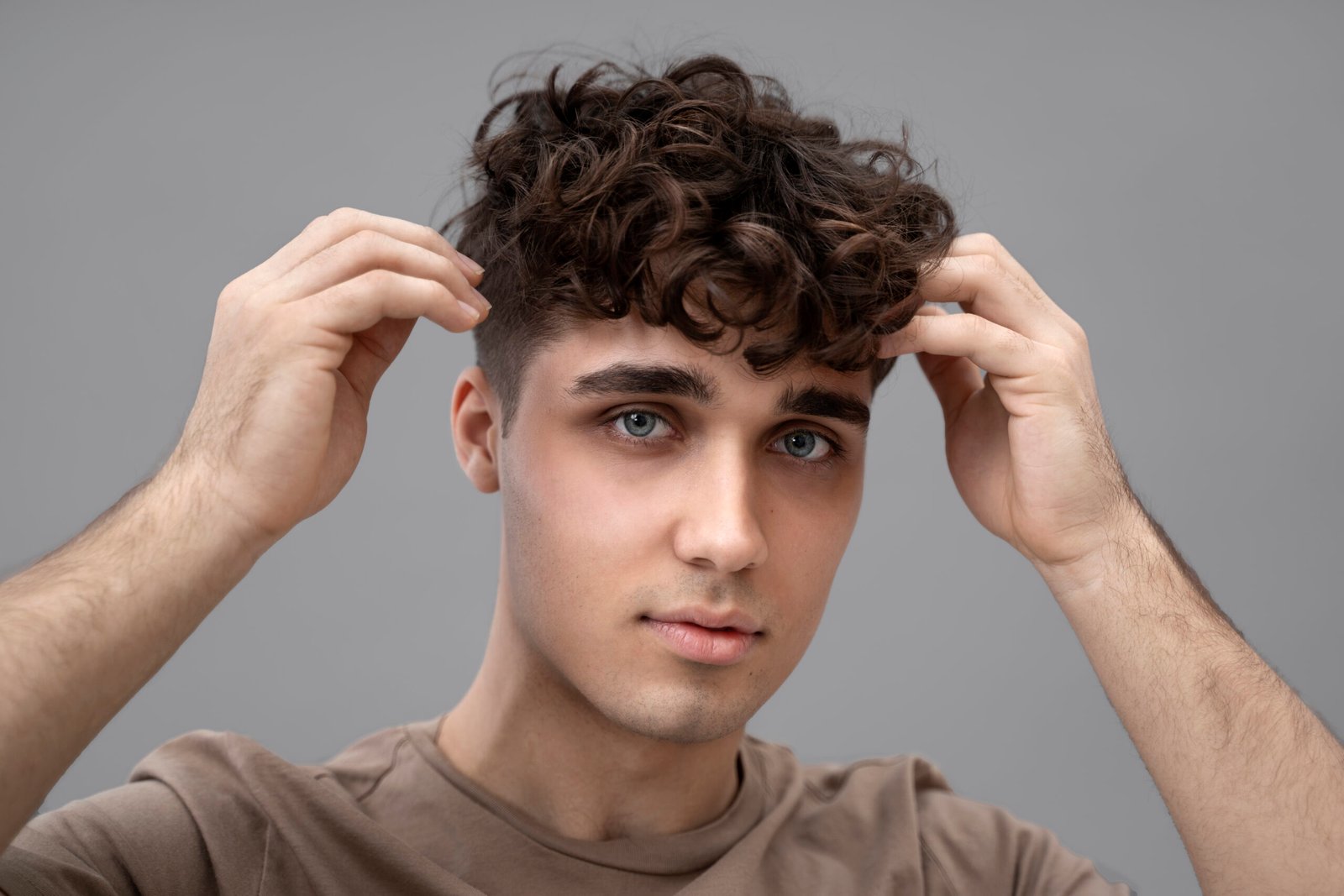
Curly hair does not automatically rule out a hair transplant. The curve beneath your scalp can make removing follicles more delicate, yet with careful planning many people with waves, curls and coils can still explore restoring fuller coverage.
A successful plan depends on your donor hair, scalp health, hair loss pattern and the technique used. The device name alone cannot predict your result. If you are considering NeoGraft for curly hair, start with an assessment that protects the hair you have while planning realistic coverage. Learn more about NeoGraft FUE hair restoration at PURE.
Key Takeaways
- ✓Curly and coily hair can still be suitable for FUE when donor hair is healthy and stable.
- ✓Curved follicles below the skin make careful extraction technique more important.
- ✓Results depend on donor supply, placement, healing and any ongoing hair loss.
- ✓Start with a hair restoration consultation.
What Is NeoGraft Hair Restoration?
NeoGraft is a device that assists with follicular unit extraction, also called follicular unit excision or FUE. During treatment, small groups of follicles are removed from a donor area and placed into thinning areas. The procedure moves existing hair; it does not create new follicles.
NeoGraft hair restoration is still surgery, even though it avoids removing a strip of scalp. Small wounds and tiny scars remain possible. An examination should first confirm that surgery suits the cause of your hair loss. Our overview of NeoGraft FUE in Chicago explains the basics step by step.
How FUE Differs From Strip Surgery
FUE removes individual follicular units, while strip surgery (FUT) removes a narrow band of scalp and divides it into grafts. Each method has trade offs in scarring, graft numbers and recovery. Read FUE vs FUT hair transplant: key differences for a side by side look.
Why Technique Matters in NeoGraft for Curly Hair
Curved follicles may follow a different path beneath the skin than the visible hair suggests. That can make them harder to remove without injury. An extraction tool can accidentally cut through a follicle, which is called transection, and that can reduce the number of usable grafts.
Dermatology research describes techniques and tools developed for tightly curled follicles. Those findings do not prove that every device or every procedure achieves the same results, so ask how the planned technique addresses your individual follicle shape.
Curl Pattern Above vs Below the Skin
Two people with similar looking curls can have very different follicle angles underneath. A careful scalp exam, sometimes with magnification, helps your provider see what is really there. Learn how digital scalp imaging supports this kind of assessment.
Can FUE Work for Tightly Curled or Coily Hair?
An FUE hair transplant for curly hair may be possible with careful selection and a suitable technique. Research also shows that scalp thickness and firmness can affect how easily follicles come out, so visible curl pattern alone cannot answer whether treatment is suitable.
If you are considering FUE for coily hair, ask about experience with similar hair and scalp characteristics. A good discussion should also cover alternatives if safe extraction proves difficult. No device can guarantee that every follicle will survive.
Hairstyles and Hair Loss History
Tight braids, extensions and weaves can strain follicles over time. If styling has played a part in thinning, that cause needs attention first. See traction alopecia and your hairstyle for warning signs.
| Factor | Why it matters for curly hair | What your provider checks |
|---|---|---|
| Follicle curve | Curved roots are easier to cut during extraction. | Test extractions and follicle angle under magnification. |
| Donor density | Enough healthy hair must remain behind after grafts are taken. | Hairs per area and stability of the back and sides. |
| Scalp firmness | Thick or firm scalp skin can make extraction harder. | Skin feel, flexibility and healing history. |
| Scar tendency | Raised scars or keloids change the risk picture. | Personal and family history of thick scarring. |
What Benefits Can NeoGraft for Curly Hair Offer?
For suitable patients, a curly hair transplant may improve coverage in thinning areas and help create a more balanced hairline. Curly hair can also give a fuller look from fewer grafts, because each curved strand covers more scalp.
- ✓No long linear donor scar, since FUE avoids strip removal.
- ✓Natural looking hairline design that suits your curl pattern.
- ✓Uses your own donor hair for targeted coverage.
- ✓Small scattered scars, which may show with very short styles.
Ask what improvement is realistic without taking too much hair from the donor area. Greater coverage should never come at the expense of donor appearance. For thin donor areas, read NeoGraft with thin donor hair.
PURE MEDICAL SPA CHICAGO
Fuller Coverage, Planned Around Your Curls
Meet our team to see whether NeoGraft FUE fits your hair goals.
What Happens During Your NeoGraft Consultation?
A NeoGraft hair transplant consultation should begin with identifying why your hair is thinning. Bring details of medicines, previous treatments, scalp symptoms and your usual hairstyles, and mention any history of raised scars or slow healing. A hair and scalp analysis is a helpful first step.
Questions to Ask Before Choosing FUE
- ✓Is my hair loss stable enough for surgery?
- ✓Do I have enough healthy donor hair?
- ✓How will follicle curvature affect extraction?
- ✓What happens if too many grafts become damaged?
- ✓Could another method, such as PRP or medical therapy, suit me better?
- ✓How will future thinning affect the plan?
Request a written summary of the proposed approach, expected recovery and follow up care, and take time to review it before deciding.
How Should You Compare Before and After Results?
Curly hair transplant before and after photos can help explain possible changes, but they cannot guarantee your outcome. Look for similar curl patterns, hair loss and donor characteristics, with consistent lighting, angles, hair length and styling.
Ask to see the donor area as well as the hairline, because coverage at the front is only part of the result. Our hair restoration results timeline explains why early photos rarely show the final look.
Recovery and Long Term Planning
Follow written instructions about washing, exercise, headwear and protecting the grafts, and ask when you can restart styling products. Temporary shedding can happen after a transplant, and visible growth takes months.
Existing hair around the transplant may continue to thin, so your plan should address ongoing hair loss too. Many patients pair surgery with PRP hair restoration or other support; compare options in hair transplant vs PRP and non surgical hair restoration options.
Visit PURE Medical Spa Across Chicagoland
PURE Medical Spa welcomes you at five convenient clinics in Chicago and the suburbs. Ask our team which location offers hair restoration consultations and pick the visit that fits your schedule.
PURE Medical Spa Gold Coast (N. Dearborn), Chicago
875 N Dearborn St, Suite 300, Chicago, IL 60610
Book OnlineCall or Text 312.312.7873Naperville 331.283.0440
Frequently Asked Questions
Can you get a NeoGraft hair transplant with curly hair?
Possibly. Curly hair does not automatically exclude you. Donor quality, scalp health and safe extraction matter most.
Is FUE hair transplant suitable for naturally curly hair?
It can be. An assessment should consider the follicle shape beneath the skin and the experience needed to remove it safely.
Does curly hair make NeoGraft hair transplantation more difficult?
It can. Curved follicles are harder to follow during extraction, and accidental cutting may damage grafts, so technique and test extractions matter.
Can NeoGraft work for tightly curled or coily hair?
Suitability varies. Evidence for specialized FUE approaches is encouraging, but it should not be treated as a guarantee for a particular device or patient.
Which hair transplant method suits curly hair?
There is no universal answer. Compare suitable FUE techniques with strip surgery, considering donor supply, scarring and graft protection, during a consultation.
BOOK YOUR VISIT
Your Curls, Your Plan
Book a hair restoration consultation at a PURE clinic near you.
Safety note: Hair transplant surgery may be unsuitable with inadequate donor hair, active scalp disease or medical conditions that affect healing. Risks include infection, bleeding, scars and poor graft growth. Seek medical advice promptly for severe pain, fever, spreading redness or unexpected symptoms. This article is educational and does not replace a medical assessment.
References
- National Library of Medicine: Follicular unit extraction in tightly curled hair
- National Library of Medicine: Follicular unit excision transection and scalp characteristics