

Hormonal Hair Loss in Women: Causes, Signs & Treatment Guide

Hair thinning can be frustrating, especially when it seems to happen without warning. For many women, changes in hormones may affect the hair growth cycle and contribute to increased shedding, reduced hair density, or gradual thinning around the part and crown. However, hormonal changes are not always the only cause. Genetics, age, nutritional deficiencies, thyroid…
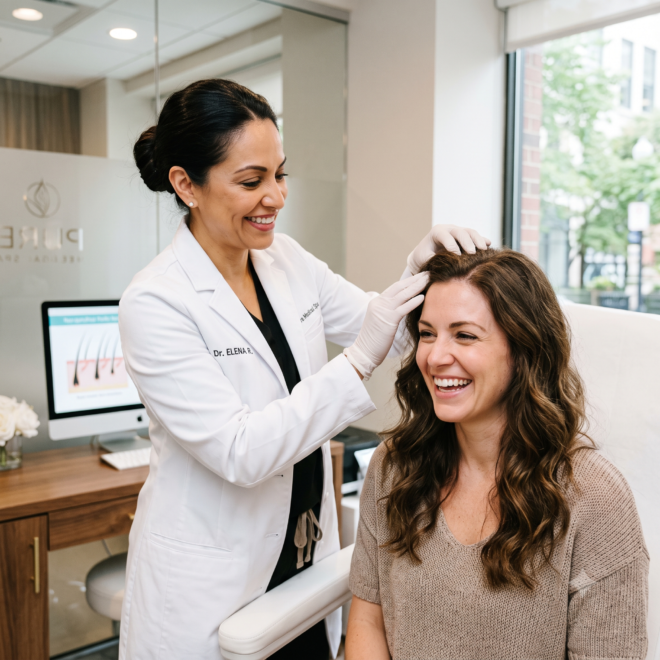

Can Hair Loss Be Reversed Without Surgery?

Complete Guide to Non-Surgical Hair Restoration Hair loss can affect confidence, appearance, and overall well-being. The good news is that many people experiencing early to moderate hair thinning do not need surgery to improve hair growth. Thanks to advancements in dermatology, several evidence-based treatments can stimulate dormant hair follicles, strengthen existing hair, and slow further…

20 Hair Loss Myths Debunked by Dermatologists

Hair loss advice is everywhere. Some people blame hats. Others blame shampoo, stress, or washing too often. These ideas may sound believable, but following the wrong advice can delay the right hair loss treatment. The truth is that hair loss has many possible causes. Genetics, hormones, nutrition, illness, medications, scalp inflammation, and autoimmune diseases can…

Hair Analysis for Hair Loss: Scalp Inflammation Results

“`html Hair Analysis for Hair Loss: Find the Root Cause Before Treatment Hair loss is not a diagnosis—it is a symptom. Two people can experience similar thinning but have completely different underlying causes. One may have inflammation, another hormonal changes, while a third may have nutritional deficiencies or genetic hair loss. That is why a…

How Many PRP Sessions Do You Need for Hair Growth?

A Complete Guide to Better Results Hair thinning and excessive hair shedding can affect both confidence and appearance. If you’re searching for a proven hair restoration treatment without surgery, Platelet-Rich Plasma (PRP) has become one of the most recommended options by dermatology professionals. One of the most common questions patients ask is How Many PRP…