


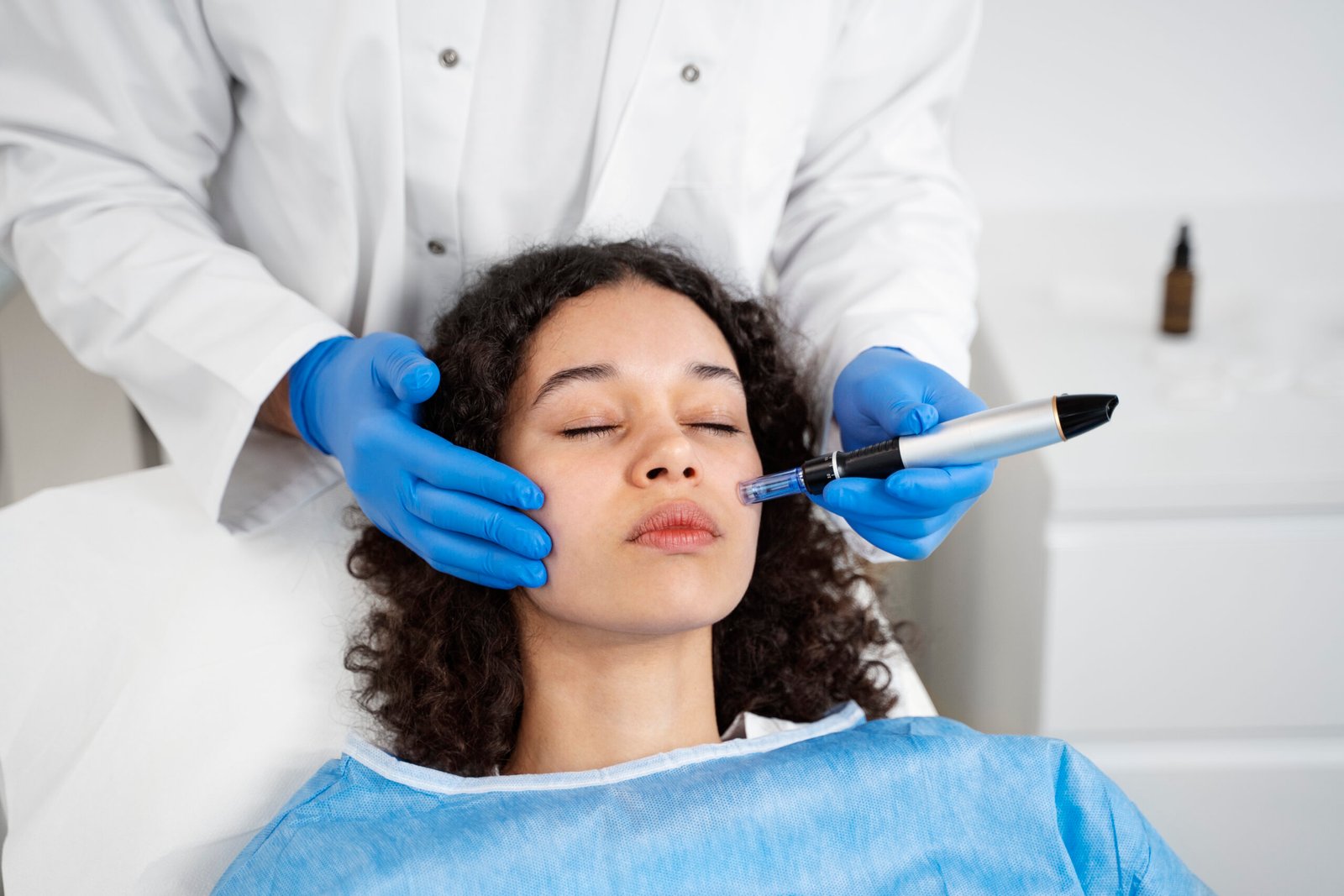
A surgical scar is a sign your body healed, and many scars soften and flatten beautifully with time. Some stay a little uneven, firm or different in texture from the skin around them. If your incision has healed and its texture still bothers you, microneedling is a great option to discuss.
Microneedling uses fine needles to create tiny, controlled channels that prompt your skin’s own repair and collagen response. Timing is everything, so your healing, your surgeon’s advice and your scar’s features guide every plan at PURE Medical Spa.
Key Takeaways
- ✓Microneedling can soften uneven scar texture by encouraging collagen remodeling.
- ✓Treatment starts only after the incision has fully healed and your surgeon agrees.
- ✓Raised scars and keloids need extra caution and sometimes a different treatment.
- ✓Ready to talk timing? Book a consultation and bring your surgery details.
How Microneedling Helps Scars
Collagen gives skin its strength and smooth texture. Microneedling encourages the skin to rebuild and reorganize collagen, which can help a scar blend with the surrounding skin. A review in Dermatologic Surgery supports its use for several scar types while noting that treatment protocols still vary.
- ✓Smoother looking texture across the scar.
- ✓Improvement in some shallow depressions.
- ✓Softer looking scar edges.
- ✓A more even transition between the scar and nearby skin.
When Can Treatment Begin?
1. Your Incision Must Be Fully Healed
The skin needs to be completely closed first. Open areas, scabs, drainage or increasing tenderness need your surgeon’s attention, not a cosmetic treatment. Even when the surface looks healed, deeper tissue may still be recovering, so ask your surgeon whether the area is ready, especially after extensive surgery or any complication.
2. Your Scar Is Still Maturing
Scars keep changing for months as collagen reorganizes, and many look better with time alone. A study in Plastic and Reconstructive Surgery reported improved scar scores when microneedling began early after surgery, but it followed a specific protocol in a small group. It does not set one start date for everyone, and your surgeon’s guidance comes first.
3. You Have a Proper Assessment
Share your surgical history, medicines, any past healing problems and any history of raised scars. That conversation shows whether microneedling is the right fit or whether another scar treatment would serve you better.
PURE MEDICAL SPA CHICAGO
Smoother Skin, Thoughtfully Timed
We plan scar treatment around your healing and your surgeon’s advice.
Which Scars Respond Best?
Shallow, depressed scars
Collagen remodeling can soften some indentations. Deeper ones may need another approach.
Uneven texture
Scars that feel firmer or look different from nearby skin often improve gradually.
Raised scars and keloids
Extra caution is needed, because new skin injury can worsen scarring in susceptible people.
If you also have acne scars, microneedling for acne scars explains how the approach differs for those.
What to Expect at Your Appointment
Your provider assesses the scar and the surrounding skin and reviews your medical history, medicines and skin sensitivity. The area is cleansed, numbing may be applied and a professional device creates the micro channels. Afterward, temporary redness, swelling, sensitivity or pinpoint bleeding are normal.
Follow your aftercare instructions, which usually include gentle cleansing, skipping irritating products for a few days and protecting the area from sun while it heals.
Tracking Your Progress
Results build gradually, so the first days do not show your final outcome. Photos in consistent lighting help you and your provider judge changes in texture, flexibility and color. Further sessions depend on how your skin responds rather than a fixed schedule. Read why microneedling is the gold standard for scar reduction for more on how results develop.
GOOD TO KNOW
Protein, fruit, vegetables and whole grains support normal tissue repair.
Vitamin C and zinc contribute to normal wound healing, but supplements do not guarantee a better scar result.
Silicone products, laser, injections or surgical revision may suit some scars better, and a good provider will say so.
Visit PURE Medical Spa Across Chicagoland
PURE Medical Spa welcomes you at five convenient clinics in Chicago and the suburbs. Ask our team which location offers microneedling and pick the visit that fits your schedule.
PURE Medical Spa Gold Coast (N. Dearborn), Chicago
875 N Dearborn St, Suite 300, Chicago, IL 60610
Book OnlineCall or Text 312.312.7873Naperville 331.283.0440
Frequently Asked Questions
When can I start microneedling after surgery?
Only after the incision has fully closed and healed and your surgeon or a qualified clinician agrees the area is ready. There is no single waiting period that fits every operation or every person.
Can microneedling improve surgical scars?
It can improve the look of suitable scars by encouraging collagen remodeling, especially uneven texture and shallow depressions. Results are gradual, and complete scar removal is not guaranteed.
How many microneedling sessions will a scar need?
It depends on the scar and how your skin responds. Most plans involve a series spaced several weeks apart, with progress reviewed before each visit.
Is microneedling safe for raised scars or keloids?
These need extra caution, because new skin injury can worsen scarring in people prone to keloids. Your provider will assess the scar first and may suggest a different approach.
Who should avoid microneedling on a surgical scar?
Anyone with an open wound, active infection, poor healing or a history of keloids should get professional guidance first, and treatment is postponed until the area is safe.
BOOK YOUR VISIT
Love the Way Your Skin Heals
Book a microneedling consultation and get a scar plan timed around your recovery.
Safety note: Microneedling is never performed over open wounds or active skin infection. People with a history of keloids or impaired healing need a professional assessment first. Contact your surgeon if your incision becomes painful, opens, drains or shows signs of infection, such as spreading redness, pus or fever.
References
- Dermatologic Surgery: Microneedling for the treatment of scars: an update for clinicians (Juhasz and Cohen, 2020)
- Plastic and Reconstructive Surgery: Microneedling outcomes in early postsurgical scars (Claytor et al., 2022)