

Dark spots, acne marks and uneven skin tone can make a clear-looking complexion hard to achieve. A VI Peel is a professional chemical peel that may improve selected pigment concerns by exfoliating the skin. How often you repeat it matters, because every person’s skin heals differently.
So, how often should you get a VI Peel? The answer depends on your pigmentation, skin sensitivity, healing response and goals. At PURE Medical Spa, a personalized consultation helps decide when another treatment is right and how to maintain results safely.
Key Takeaways
- ✓VI generally suggests a series of 3 to 6 peels, about 4 to 6 weeks apart, for stubborn pigment.
- ✓Your next peel should wait until peeling, redness and sensitivity have fully settled.
- ✓For maintenance, VI suggests about four peels a year, roughly one per season.
- ✓Starting a series? Our Buy 2, Get 1 Free offer gives you 3 VI Peels for $199. See the VI Peel page.
How Often Should You Get a VI Peel for Dark Spots?
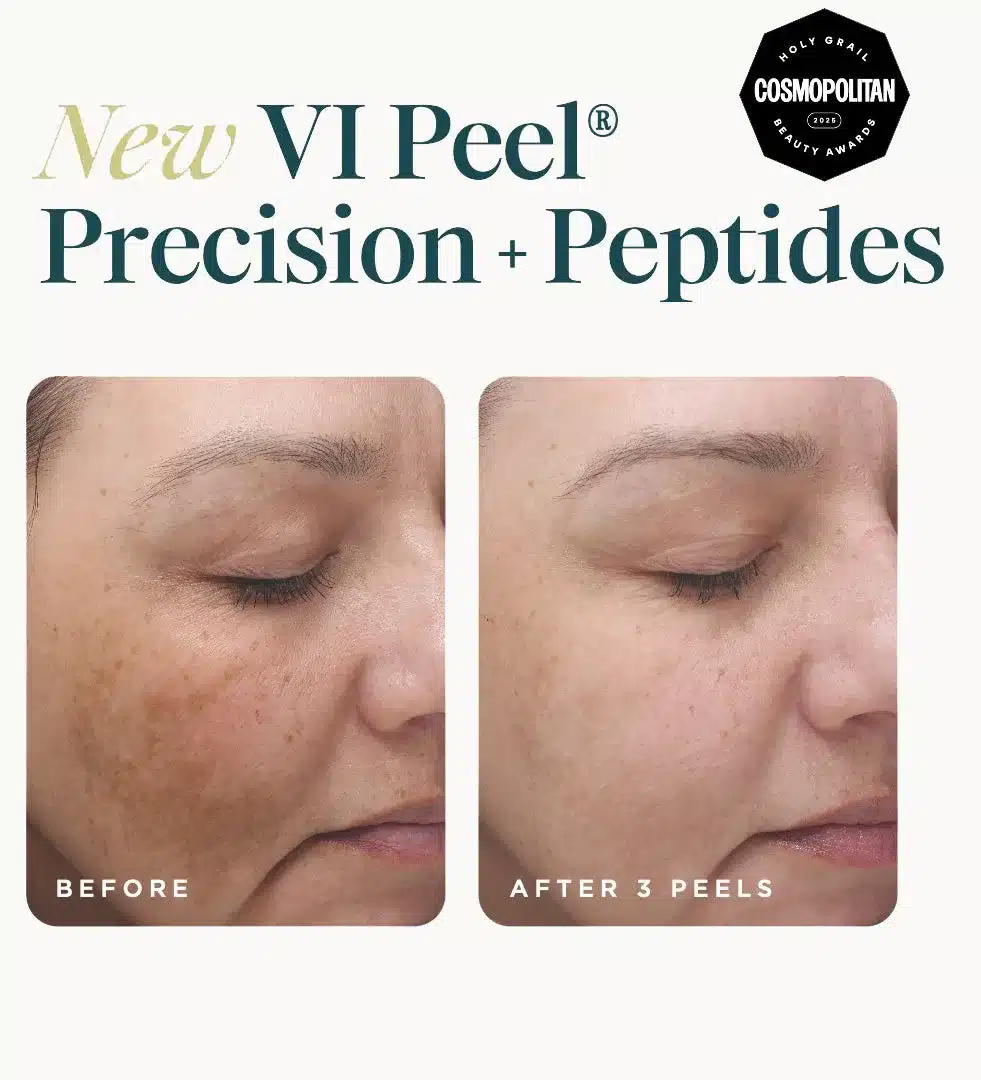
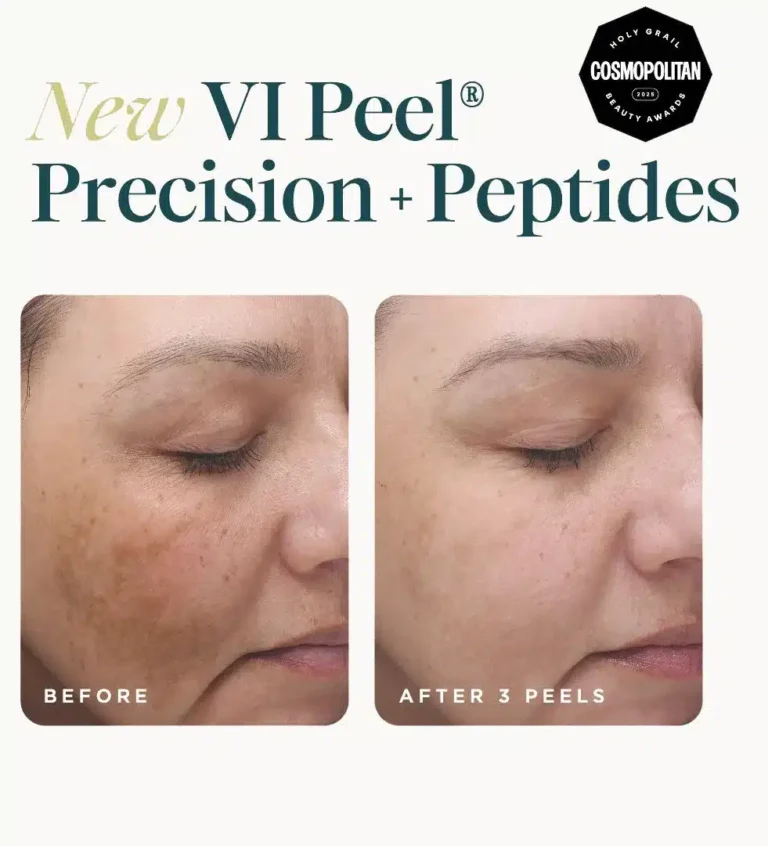
There is no single schedule for everyone, but there is a useful starting point. VI, the maker of VI Peel, generally recommends a series of 3 to 6 peels spaced about 4 to 6 weeks apart for best results, then maintenance peels about four times a year. The American Academy of Dermatology also notes that peel frequency depends on the depth of the peel and your individual needs.
Repeating treatment too soon can cause irritation and may make pigmentation worse, so your provider checks your skin before each session. They may look at:
- ✓Whether existing dark spots look lighter.
- ✓Whether peeling, redness and sensitivity have fully resolved.
- ✓Your history of pigmentation and previous treatments.
- ✓Your current skincare products and sun exposure.
The goal is steady improvement, not frequent peels without checking how your skin responded.
Benefits of a VI Peel for Uneven Skin Tone
Lighter-looking pigment
Exfoliation may reduce the appearance of certain surface dark marks.
Smoother texture
Shedding surface cells can make rough skin look smoother.
Brighter complexion
Many people notice fresher-looking skin once peeling ends.
Fewer acne marks
Selected peels may help discoloration left behind by blemishes.
Results vary, and a peel cannot promise complete removal of pigment. Melasma, acne marks and sun spots may each need a different plan. Our posts on VI Peel for melasma and VI Peel for acne scars go deeper.
PURE MEDICAL SPA CHICAGO
Plan Your VI Peel Series With Us
We will map out spacing that suits your skin, your schedule and your goals.
What Determines Your Treatment Frequency?
Pigmentation type and skin sensitivity
Sun spots, melasma and post-inflammatory hyperpigmentation have different causes. Identifying the underlying concern helps decide whether a peel is suitable and how often to repeat it. If your skin darkens easily after irritation, your provider may space peels further apart. Tell them about sensitive skin, past reactions, medications and recent cosmetic procedures.
Healing and progress checks
Take photos in consistent lighting and compare your skin once peeling has settled. Our guide to tracking VI Peel results shows how. Temporary dryness, redness and peeling are normal; worsening discoloration, lasting irritation or unexpected changes should be checked before another session. Your provider may suggest more recovery time, skincare changes or a different treatment.
Aftercare, Nutrition and Peel Maintenance for Pigmentation
GOOD TO KNOW
Protect your skin from the sun. Use broad-spectrum SPF 30 or higher, reapply as directed and seek shade. Sun exposure can bring dark spots back, even after a great result.
Keep your routine gentle. Use a mild cleanser and moisturizer while you heal. Pause scrubs, exfoliating acids and retinoids until your provider says to restart them. See our VI Peel and retinol checklist.
Never pull peeling skin. Picking increases irritation and the chance of new discoloration.
Eat a balanced diet. Vegetables, fruit, protein and healthy fats support normal skin function, though no food or supplement guarantees better peel results.
When Should You Book Another VI Peel in Chicago?
Book a reassessment once your skin has completely recovered. Your provider will look at the remaining pigment and decide whether another peel or a different approach makes sense. Ask about the recommended formula, expected recovery, possible side effects and your full plan.
When comparing VI Peel costs in Chicago, ask what the price includes; at PURE, your peel comes with an aftercare kit and guidance. Maintenance should follow your skin’s response rather than an automatic calendar. If you are new to the treatment, start with what a VI Peel is and who it is best for.
Current VI Peel Offers at PURE
BUY 2, GET 1 FREE
$199
Three VI Peels for $199 in total, a simple way to start a series.
HOLIDAY SALE
$999
Two VI Peels plus two microneedling sessions, alternated on separate visits.
VI TOXBOOSTER
$8.99
Botox at $8.99 per unit when you pair it with a VI Peel.
See VI Peel Details and OffersBook Online
Visit PURE Medical Spa Across Chicagoland
PURE Medical Spa welcomes you at five convenient clinics in Chicago and the suburbs. Ask our team which location offers VI Peel and pick the visit that fits your schedule.
PURE Medical Spa Gold Coast (N. Dearborn), Chicago
875 N Dearborn St, Suite 300, Chicago, IL 60610
Book OnlineCall or Text 312.312.7873Naperville 331.283.0440
Frequently Asked Questions
How often should you get a VI Peel for dark spots?
VI generally suggests a series of 3 to 6 peels spaced about 4 to 6 weeks apart. Your provider confirms the interval after checking how your skin healed.
How many VI Peel treatments may be needed for uneven skin tone?
Some people see a visible change after one peel, while stubborn pigment often needs a series. Results depend on the cause and severity of the pigmentation.
How long should you wait between VI Peel treatments?
Wait until your skin has fully recovered and your provider agrees another session is appropriate, typically at least 4 weeks.
Can regular VI Peel treatments help maintain a more even skin tone?
Yes, well-chosen maintenance peels, often about four a year, may help hold results. Daily sunscreen and consistent skincare remain essential.
How do you know when it is time for another VI Peel?
Consider reassessment once peeling and redness have settled and pigment is still a concern. Persistent redness, irritation or darker spots should be checked first.
Safety note: Chemical peels may not suit everyone, including people with active skin infections or open wounds. Discuss pregnancy, medications, skin conditions and previous cold sores before treatment. Seek medical evaluation for unusual, changing or bleeding spots.
References
- American Academy of Dermatology: Chemical peels: FAQs
- National Library of Medicine: Management of post-inflammatory hyperpigmentation in skin of color: a short review