

Skin does not suddenly become “old” at 40 or 50, but the concerns people want to treat often change with time. Fine lines may become more visible, sun damage easier to see, texture rougher and wrinkles more established. The good news is that today’s resurfacing options can be tuned to exactly what your skin needs now.
That is why laser resurfacing for mature skin should not be planned by age alone. A smarter approach looks at skin quality, sun damage, wrinkle depth, pigment, treatment goals and how much recovery time feels realistic. Modern laser resurfacing can improve photoaging, wrinkles, uneven texture and discoloration, while different laser types create different levels of skin injury and recovery. Learn more about laser skin resurfacing at PURE.
Key Takeaways
- ✓Your skin’s condition, not your birthday, should guide laser choice.
- ✓Nonablative and fractional options suit many mild to moderate concerns.
- ✓Stronger is not always better; recovery matters too.
- ✓Start with a laser resurfacing consultation.
How Does Laser Resurfacing for Mature Skin Change After 40?
In the 40s, many patients are dealing with a mix of early wrinkles, accumulated sun damage, uneven tone and changes in texture. Laser resurfacing for aging skin may be considered when skincare alone no longer gives the improvement someone wants. Options may include fractional or nonablative treatment when concerns are mild to moderate.
A 2024 study of nonablative fractional laser resurfacing reported improvement in measures of photodamage including wrinkles, texture, pigmentation, radiance and pore appearance in adults with mild to moderate photoaging. That does not mean the same treatment suits every person over 40. For a wider look at this decade, read skin rejuvenation treatments for women over 40.
Common Goals in Your 40s
- ✓Softening early crow’s feet and forehead lines.
- ✓Fading sun spots and uneven tone.
- ✓Refining texture and the look of pores.
- ✓Restoring a fresher, brighter finish.
What Changes After 50?
After 50, the treatment plan may need to address several issues at once. Someone may be considering laser resurfacing for wrinkles, for sun damaged skin, for fine lines and for skin texture together. More visible photoaging does not automatically mean the strongest laser is required.
A systematic review comparing ablative and nonablative lasers found that both approaches can improve facial rejuvenation outcomes. The available randomized studies were relatively small, which makes individual treatment selection important. Hormonal shifts can also change how skin heals; see perimenopause skin changes.
Common Goals in Your 50s and Beyond
- ✓Smoothing more established wrinkles.
- ✓Improving texture roughened by years of sun.
- ✓Evening out pigment and blotchiness.
- ✓Supporting firmer looking skin through collagen remodeling.
Ablative vs Nonablative: Why Stronger Is Not Always Better
Ablative lasers remove controlled portions of the skin surface. Nonablative lasers heat the tissue while preserving more of the outer layer. Fractional treatment creates microscopic treatment zones rather than treating the whole surface at once.
CO2 laser resurfacing for mature skin may be considered for more established wrinkles, photoaging or texture concerns, and CO2 remains an important ablative option for facial rejuvenation. Fractional laser resurfacing for aging skin can balance improvement and recovery because energy, density, number of passes and depth can all be adjusted. Your age alone should not decide between them. For the science, read how laser skin resurfacing works.
| Option | Typical concerns | Recovery |
|---|---|---|
| Nonablative fractional | Mild to moderate lines, texture, sun spots | Lighter; usually a series of visits |
| Fractional ablative (CO2 or erbium) | Moderate wrinkles, rougher texture, photoaging | Several days of visible healing |
| Full field ablative | Selected deeper wrinkles | The longest recovery; carefully selected patients |
What Happens During a Facial Laser Resurfacing Visit?
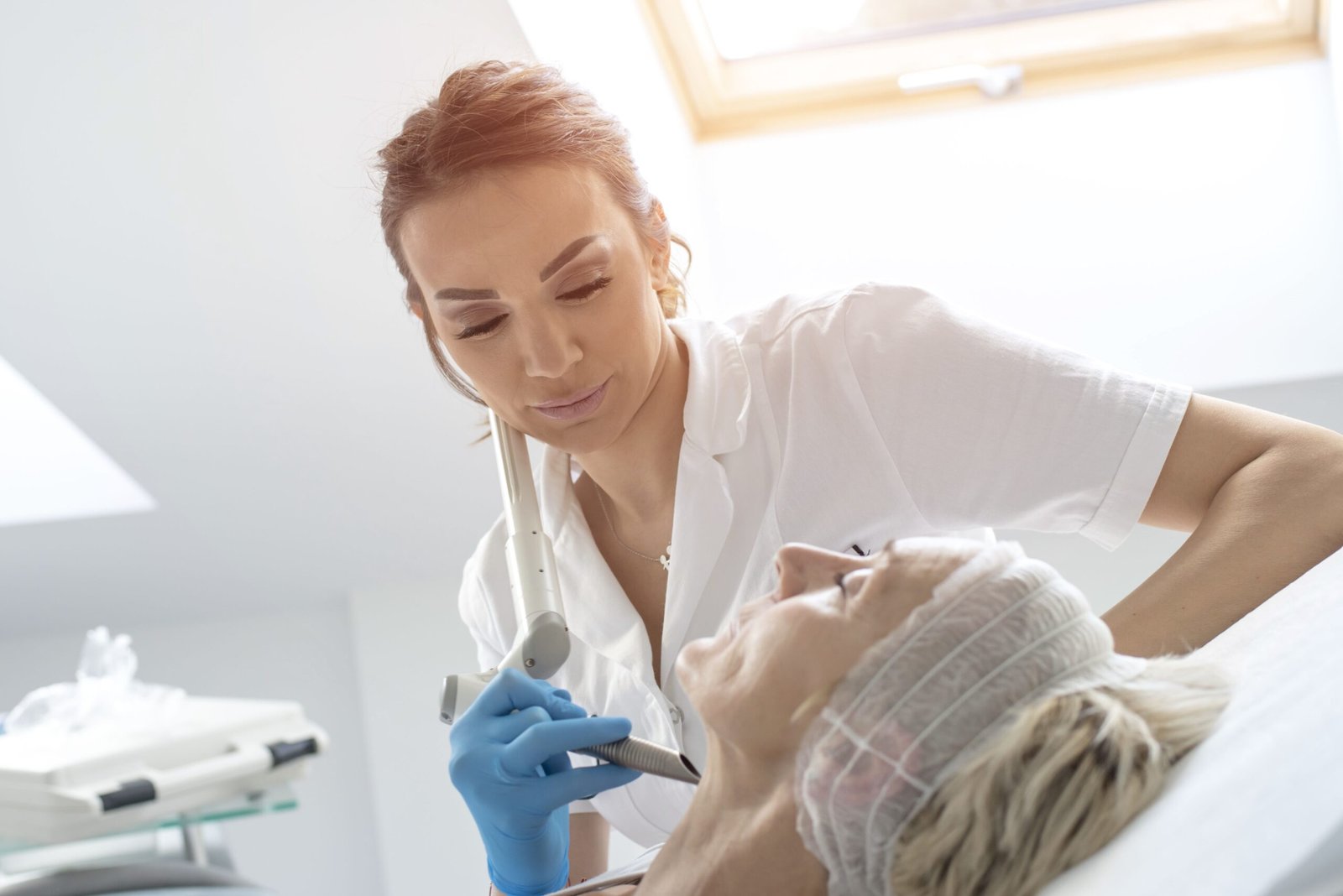
Facial laser resurfacing uses a handpiece that the provider guides over the chosen area, adjusting settings to the device and skin concern. Planning may include:
- ✓Laser type and wavelength.
- ✓Ablative or nonablative treatment.
- ✓Fractional density, energy level and number of passes.
- ✓Treatment area, skin tone and pigment history.
- ✓Previous procedures and expected downtime.
Dermatology literature emphasizes that fractional settings can be adjusted through density, fluence, pulse duration and passes. That is why a personal plan is more useful than asking for the “strongest laser”. Compare other options in chemical peels vs laser resurfacing.
PURE MEDICAL SPA CHICAGO
Radiant Skin at Every Age
Plan laser resurfacing around your skin, not your birthday.
Benefits of Laser Resurfacing for Mature Skin
For an appropriate patient, potential benefits include:
- ✓Smoother looking texture.
- ✓Softer appearance of fine lines.
- ✓Improvement in photoaging and more even looking pigment.
- ✓Improvement in selected scars.
- ✓Fresher looking skin.
A recent review found that ablative laser treatment produces a wound healing response linked with dermal remodeling and new collagen formation. Results still depend on the device, treatment depth, baseline skin and healing response. Read more in collagen boosting treatments that work.
Pairing Resurfacing With Injectables
Laser improves skin quality, while Botox and fillers address movement and volume. Our guide to laser resurfacing with Botox or fillers explains timing, and laser resurfacing around the mouth covers lip lines in detail.
Why Does a Laser Resurfacing Consultation Matter?
A good consultation identifies what is actually making the skin look older. For one person pigment may be the main concern; for another, wrinkles or texture matter more. A personal quote may also depend on:
- ✓Size and number of treatment areas.
- ✓Laser platform and treatment depth.
- ✓Whether one visit or a series is planned.
- ✓Pre treatment and post treatment care.
At PURE Medical Spa, laser resurfacing is discussed around your concern rather than age alone, and your consultation helps decide whether a gentler or more intensive approach fits your skin. Ask about expected recovery as well as expected improvement. If sun damage is a focus, see signs your skin is showing sun damage and sun damaged skin treatments.
Supporting Mature Skin Around Laser Treatment
Skincare does not replace resurfacing, but it supports the plan. Products to discuss with your provider, available through the PURE skincare shop:
- ✓ALASTIN Regenerating Skin Nectar for procedure focused skin support.
- ✓SkinMedica HA5 Hydra Collagen Water Burst Moisturizer for hydration when appropriate.
- ✓ALASTIN HydraTint Pro Mineral SPF 36 for mineral sun protection once your provider approves sunscreen after treatment.
Your post laser routine should follow the instructions for your specific laser. See why recovery skincare matters.
Visit PURE Medical Spa Across Chicagoland
PURE Medical Spa welcomes you at five convenient clinics in Chicago and the suburbs. Ask our team which location offers laser resurfacing and pick the visit that fits your schedule.
PURE Medical Spa Gold Coast (N. Dearborn), Chicago
875 N Dearborn St, Suite 300, Chicago, IL 60610
Book OnlineCall or Text 312.312.7873Naperville 331.283.0440
Frequently Asked Questions
Is laser resurfacing good for skin over 40?
It can be appropriate when wrinkles, sun damage, pigmentation or texture are concerns. The right treatment depends on skin condition rather than age alone.
Which laser resurfacing suits skin over 50?
No single laser suits everyone. CO2, erbium, fractional ablative or nonablative treatment may be considered depending on the concern and the downtime you can accept.
Does laser resurfacing work better for wrinkles or sun damage?
Laser resurfacing can address both, but different wavelengths and depths may be chosen depending on whether wrinkles, pigment or texture is the main concern.
How does laser resurfacing change as you get older?
The plan may focus more on cumulative photoaging, deeper wrinkles, texture and recovery. Age alone does not set treatment intensity.
CO2 vs fractional laser resurfacing for mature skin: what is the difference?
CO2 describes a laser wavelength and can itself be delivered fractionally. The more useful comparison is full field versus fractional, and ablative versus nonablative resurfacing.
BOOK YOUR VISIT
Your Skin, Your Timing
Book a laser resurfacing consultation at a PURE clinic near you.
Safety note: Laser resurfacing may not be appropriate during active skin infection, open wounds, uncontrolled inflammatory skin disease or when healing risk is high. Pigment history, medications, sun exposure, previous procedures and medical history should be reviewed before treatment. Seek medical care for severe pain, increasing swelling, spreading redness, drainage, blistering or concerning pigment changes after treatment. This article is educational and does not replace a medical assessment.
References
- National Library of Medicine: Nonablative fractional diode laser resurfacing for photoaged skin
- National Library of Medicine: Systematic review comparing ablative and non ablative lasers in skin rejuvenation