





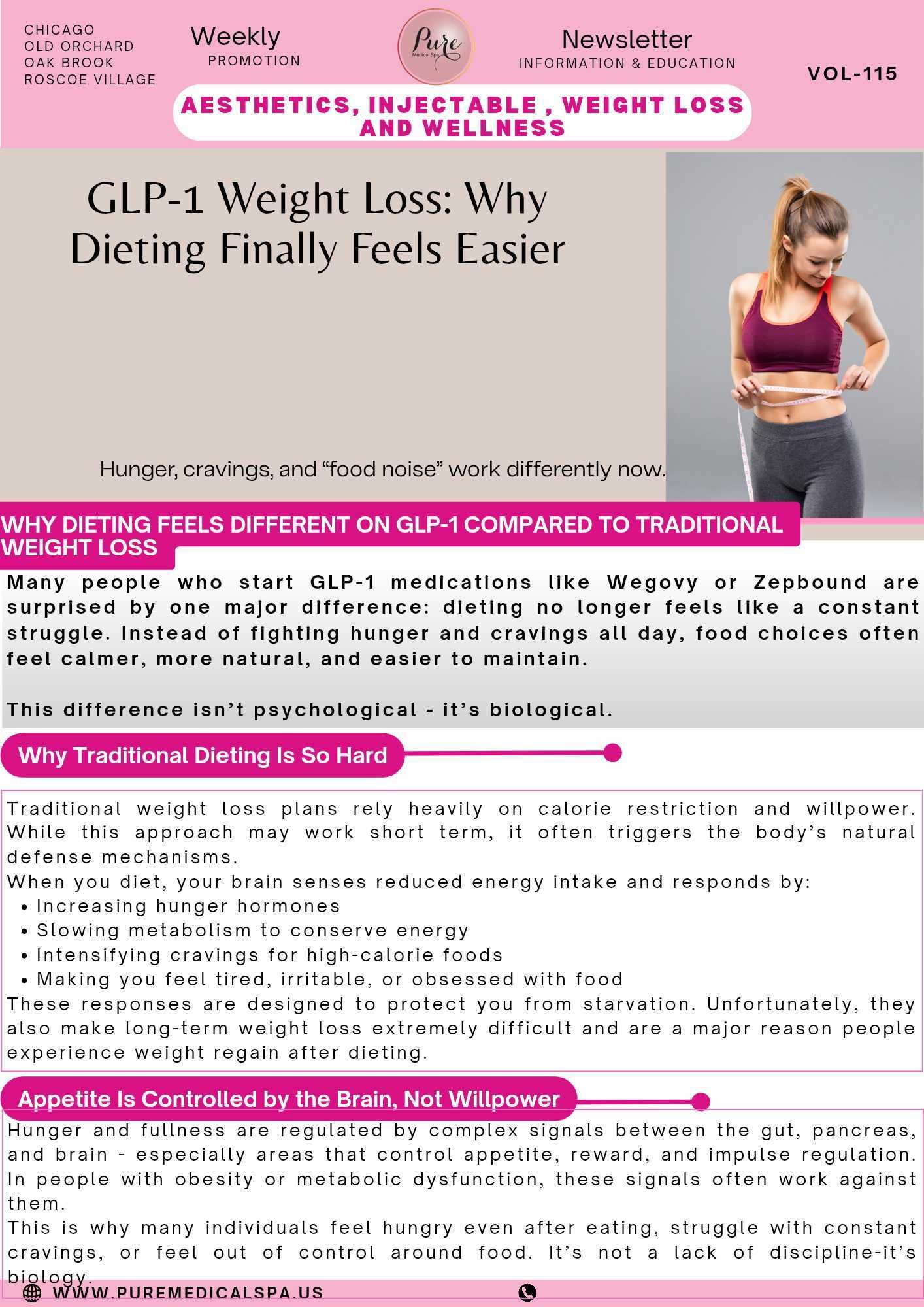
Many people who start GLP-1 medications like Wegovy or Zepbound are surprised by one major difference: dieting no longer feels like a constant struggle. Instead of fighting hunger and cravings all day, food choices often feel calmer, more natural, and easier to maintain.
This difference isn’t psychological—it’s biological.
Why Traditional Dieting Is So Hard
Traditional weight loss plans rely heavily on calorie restriction and willpower. While this approach may work short term, it often triggers the body’s natural defense mechanisms.
When you diet, your brain senses reduced energy intake and responds by:
- Increasing hunger hormones
- Slowing metabolism to conserve energy
- Intensifying cravings for high-calorie foods
- Making you feel tired, irritable, or obsessed with food
These responses are designed to protect you from starvation. Unfortunately, they also make long-term weight loss extremely difficult and are a major reason people experience weight regain after dieting.
Appetite Is Controlled by the Brain, Not Willpower
Hunger and fullness are regulated by complex signals between the gut, pancreas, and brain—especially areas that control appetite, reward, and impulse regulation. In people with obesity or metabolic dysfunction, these signals often work against them.
This is why many individuals feel hungry even after eating, struggle with constant cravings, or feel out of control around food. It’s not a lack of discipline—it’s biology.
How GLP-1 Medications Change the Experience
GLP-1 medications work by targeting the biological pathways that regulate appetite. They enhance signals of fullness, reduce hunger, and help the brain respond more appropriately to food intake.
On GLP-1 therapy, many patients notice:
- Reduced appetite without forcing restriction
- Feeling full sooner and staying satisfied longer
- Fewer cravings and less food obsession
- More stable energy levels throughout the day
Instead of constantly resisting hunger, the body begins to cooperate with weight loss.
Why Eating Feels More Sustainable on GLP-1
One of the biggest differences between GLP-1–supported weight loss and traditional dieting is sustainability. When hunger is controlled at the hormonal level, healthy eating feels more intuitive.
Patients often find they:
- Naturally choose smaller portions
- Stop eating when satisfied rather than overly full
- Snack less between meals
- Feel more in control around food
This makes lifestyle changes easier to maintain over time, rather than feeling like a temporary diet.
GLP-1 Is a Tool, Not a Shortcut
It’s important to understand that GLP-1 medications are not a replacement for healthy habits. Instead, they create an environment where those habits can succeed.
When combined with:
- Balanced nutrition
- Regular movement
- Adequate sleep
- Medical guidance
GLP-1 therapy supports long-term metabolic health and sustainable weight management.
A New Perspective on Weight Loss
For many people, the biggest shift on GLP-1 therapy is emotional. Weight loss no longer feels like a constant battle against hunger and cravings. Instead, it feels manageable, structured, and realistic.
This is why dieting feels different on GLP-1- it works with your biology, not against it.
Final Thoughts
If traditional dieting has left you frustrated or discouraged, GLP-1 therapy may offer a new approach. By addressing appetite regulation at the brain level, these medications help make weight loss feel more achievable—and more sustainable.
Weight loss doesn’t have to be about constant struggle. With the right medical support, it can finally feel different.