





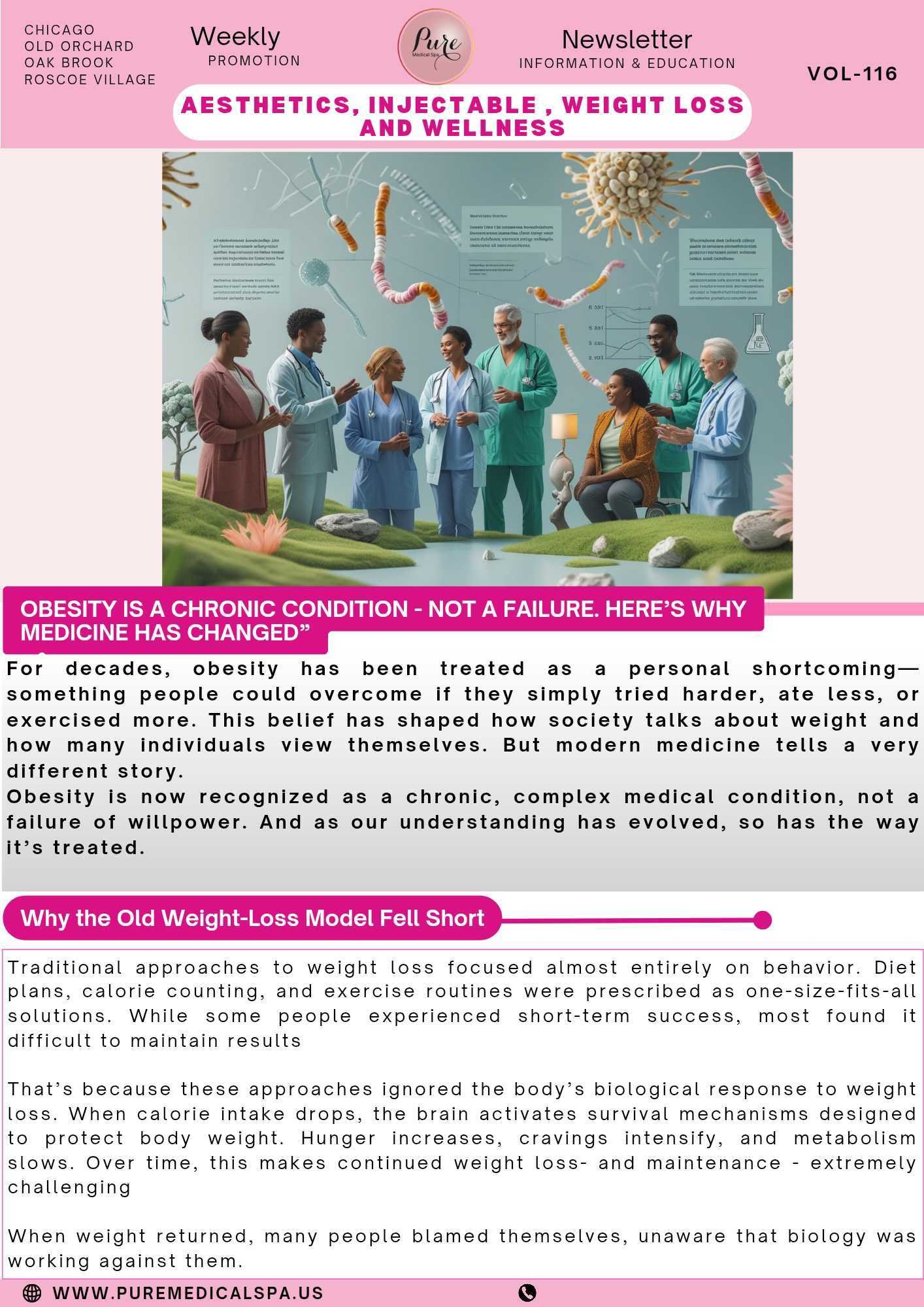
For decades, obesity has been treated as a personal shortcoming – something people could overcome if they simply tried harder, ate less, or exercised more. This belief has shaped how society talks about weight and how many individuals view themselves. But modern medicine tells a very different story.
Obesity is now recognized as a chronic, complex medical condition, not a failure of willpower. And as our understanding has evolved, so has the way it’s treated.
Why the Old Weight-Loss Model Fell Short
Traditional approaches to weight loss focused almost entirely on behavior. Diet plans, calorie counting, and exercise routines were prescribed as one-size-fits-all solutions. While some people experienced short-term success, most found it difficult to maintain results.
That’s because these approaches ignored the body’s biological response to weight loss. When calorie intake drops, the brain activates survival mechanisms designed to protect body weight. Hunger increases, cravings intensify, and metabolism slows. Over time, this makes continued weight loss – and maintenance – extremely challenging.
When weight returned, many people blamed themselves, unaware that biology was working against them.
The Science Behind Obesity
Research now shows that obesity involves hormonal, metabolic, genetic, and neurological factors. Appetite, fullness, fat storage, and energy use are regulated by signals between the gut, pancreas, and brain.
In individuals with obesity, these signaling systems may be dysregulated. The brain may continue sending hunger signals even when the body has adequate energy, or it may strongly defend a higher weight set point. This helps explain why many people feel constantly hungry, struggle with cravings, or regain weight after dieting.
These responses are not character flaws – they are physiological processes.
Why Obesity Is Considered Chronic
A chronic condition is one that requires long-term management rather than short-term fixes. Just like high blood pressure or diabetes, obesity often needs ongoing care to prevent relapse.
This is why repeated cycles of dieting rarely lead to lasting success. Without addressing the underlying biology, weight regain is common. Recognizing obesity as chronic shifts the focus from blame to treatment – and from temporary solutions to sustainable care.
How Medicine Has Changed Weight-Loss Treatment
Advances in medical research have transformed how obesity is treated. New therapies now target the hormonal pathways that regulate appetite and metabolism rather than relying solely on restriction.
GLP-1–based medications are one example of this progress. These medications help regulate hunger signals in the brain, improve feelings of fullness, and support healthier metabolic function. By addressing the root causes of weight gain, they make long-term change more achievable.
Importantly, medical treatment doesn’t replace healthy habits – it supports them.
A More Compassionate Approach to Care
Understanding obesity as a medical condition changes how patients experience care. Instead of shame or frustration, treatment becomes collaborative, personalized, and supportive.
Patients often report:
- Less mental stress around food
- Improved relationship with eating
- More consistent, sustainable weight loss
- Greater confidence and motivation
This shift allows individuals to focus on health rather than self-blame.
Final Thoughts
Obesity is not a failure – it is a chronic condition influenced by biology, environment, and genetics. As medicine has evolved, so has our ability to treat it effectively and compassionately.
Modern weight-loss care recognizes that lasting change happens when the body and brain are supported, not punished. With the right medical guidance, sustainable weight management is no longer about fighting your biology – it’s about working with it.