


Weight loss medications like Wegovy (semaglutide) and Zepbound (tirzepatide) are revolutionizing the landscape of metabolic health, but as they work to help you achieve your goals, they also profoundly affect your digestive system. Understanding these intricate interactions is key to a comfortable and successful treatment journey.
At Pure Med Spa, we specialize in providing comprehensive, medically supervised weight loss programs, including personalized plans for FDA-approved GLP-1 medications like Wegovy (semaglutide) and Zepbound (tirzepatide). We believe in empowering our patients with knowledge, especially when it comes to the crucial link between these treatments and your GLP-1 gut health effects.
🔬 The Science of GLP‑1 Gut Motility and Digestion
Both semaglutide and tirzepatide belong to a class of drugs known as GLP-1 receptor agonists. GLP-1 (Glucagon-like peptide-1) is a naturally occurring hormone in your gut that acts on various organs, including the pancreas, brain, and, most relevantly here, the stomach and intestines.
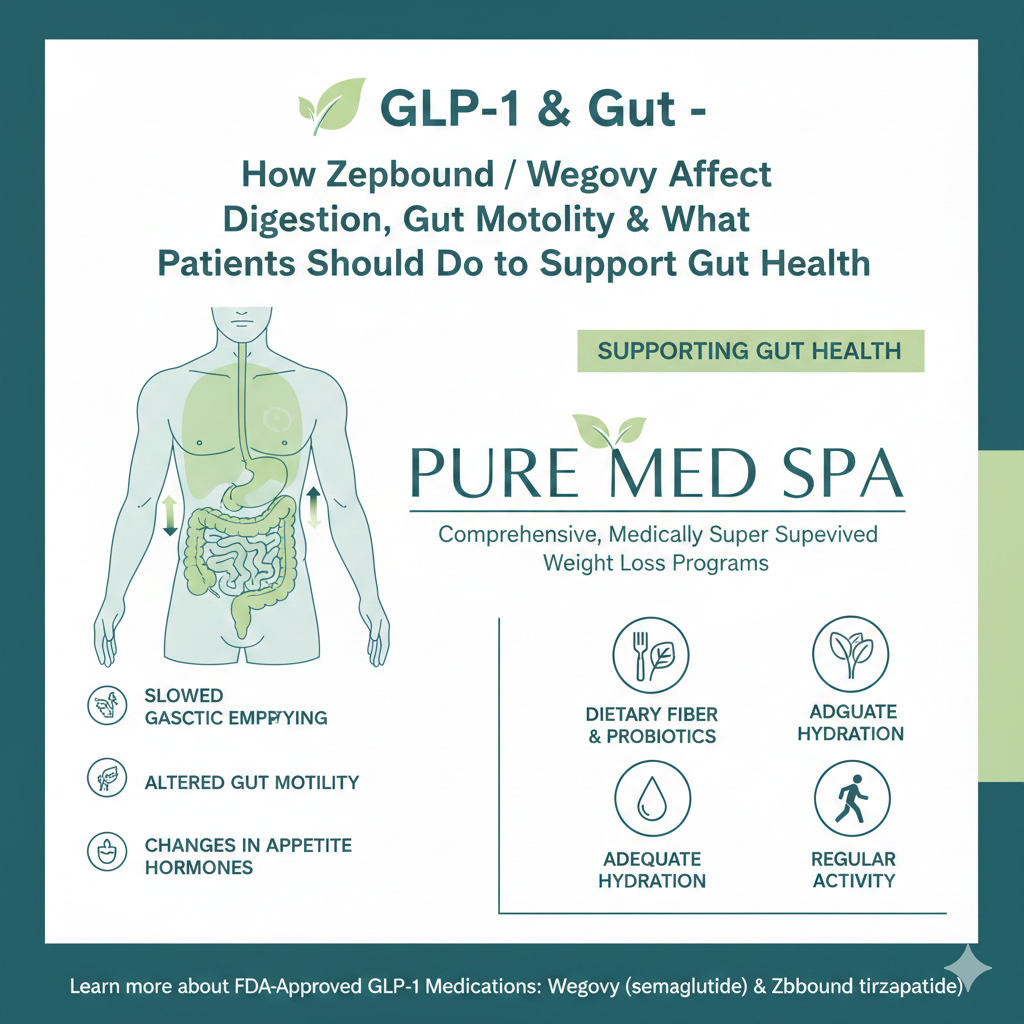
The primary mechanism for weight loss is twofold: these medications signal the brain to reduce appetite, and they dramatically slow down a process called gastric emptying, which is the movement of food from the stomach to the small intestine. This deceleration of GLP‑1 gut motility is what makes you feel full for longer, reduces your food intake, and helps regulate blood sugar.
However, this slowed transit time is also the root cause of many common tirzepatide digestive side effects and semaglutide digestion issues.
Understanding Tirzepatide Gut Effects
Tirzepatide, a dual-agonist for both GLP-1 and GIP (Glucose-dependent Insulinotropic Polypeptide) receptors, offers enhanced efficacy, but its mechanisms still rely heavily on slowing digestion. Patients often report similar gastrointestinal changes to those taking semaglutide, necessitating proactive strategies for weight loss drugs gut health support.
GLP-1 Induced Constipation and Bloating
When the digestive process slows down significantly, a common side effect is GLP‑1 induced constipation. Food and waste material remain in the system for a longer duration, leading to increased water absorption from the colon, resulting in harder, more difficult-to-pass stools.
Furthermore, this delay in transit can also contribute to common issues like gas, acid reflux, and GLP‑1 medications and bloating. Essentially, food sitting in the stomach and intestines longer can increase fermentation and gas production, creating discomfort and distension.
Navigating Digestive Side Effects with Confidence
It’s important to remember that for most patients, these tirzepatide gut effects and semaglutide digestion issues are manageable, particularly as your body adjusts to the medication and the dosage is carefully titrated. The clinical team at Pure Med Spa works closely with you to manage these symptoms and maximize the therapeutic benefits.
Focus Keyphrase Spotlight: GLP‑1 Gut Health Effects
A crucial part of your treatment journey is recognizing that the most common adverse events-like nausea, diarrhea, and constipation-are directly linked to the desired GLP‑1 gut health effects of slowing digestion. By addressing these effects directly, we can greatly improve your experience.
Semaglutide Diarrhea Causes and Management
While constipation is frequent, some patients experience the opposite: semaglutide diarrhea causes can include changes in fluid absorption and transit time in the lower intestine. Diarrhea, if persistent, can lead to dehydration and nutrient loss, making it vital to manage with your provider’s guidance. Bland, low-fat, and easy-to-digest foods are often recommended during flare-ups.
The Concern of Gastroparesis Semaglutide Symptoms
In rare cases, the effect of dramatically slowed gastric emptying can mimic the symptoms of gastroparesis, a chronic condition. Gastroparesis semaglutide symptoms include persistent, severe nausea, vomiting of undigested food, a profound feeling of fullness after only a few bites, and significant abdominal discomfort. While the drug-induced slowing of the stomach is typically reversible upon discontinuation, it’s a vital consideration for anyone with a pre-existing motility disorder. This highlights the absolute necessity of a thorough, virtual consultation to ensure these medications are safe for you.
GLP‑1 Gut Microbiome Changes
Emerging research suggests that GLP‑1 gut microbiome changes may also contribute to the overall therapeutic benefit of the drugs. By altering the speed of transit and the availability of nutrients, these medications can lead to a more favorable balance of gut bacteria, potentially supporting improved metabolic health and reduced inflammation-further emphasizing the positive GLP‑1 gut health effects.
🌟 Weight Loss Drugs Gut Health Support Strategies
Supporting your gut is essential for mitigating side effects and maximizing the long-term success of your treatment. Here are the core pillars of a great weight loss drugs gut health support plan:
- Hydration is Paramount: Due to potential side effects like diarrhea or the sheer difficulty of eating enough, dehydration is a risk. Water, unsweetened electrolyte solutions, and clear broths are your allies, especially when managing tirzepatide digestive side effects.
- Mindful Eating: Focus on smaller, more frequent, and nutrient-dense meals. Eating slower gives your body and brain time to register fullness and allows the stomach to process food more efficiently, helping to reduce GLP‑1 medications and bloating.
- Fiber Balance: To combat GLP‑1 induced constipation, gradually increase your intake of soluble fiber (found in oats, apples, beans). However, if you experience semaglutide diarrhea causes, you may temporarily need to reduce high-fiber foods to let your system rest. Always discuss fiber supplements with your provider.
- Probiotics and Fermented Foods: Introducing beneficial bacteria can help enhance the desired GLP‑1 gut microbiome changes. Yogurt, kefir, and fermented vegetables are excellent additions to your diet, offering powerful GLP‑1 gut health effects.
- Avoid High-Fat and Spicy Foods: These types of foods are notoriously slow to digest, especially when taking GLP-1 agonists, and can significantly worsen nausea, acid reflux, and feelings of fullness or gastroparesis semaglutide symptoms.
Your Path to Wellness Starts with a Consultation
Successfully integrating Wegovy or Zepbound into your life requires more than just a prescription-it requires a holistic approach that prioritizes your comfort and overall well-being. At Pure Med Spa, we provide the expert medical supervision and personalized guidance you need to navigate these profound GLP‑1 gut health effects.
We are dedicated to providing the necessary prescription for medications like Wegovy and Zepbound to qualified individuals, paired with a free virtual consultation to thoroughly review your medical history, discuss potential side effects, and create a custom plan for weight loss drugs gut health support.
Ready to take the next step?
To book your free virtual consultation and learn how to manage the tirzepatide gut effects or semaglutide digestion issues, call or text us today.
You can also book your appointment online to secure your path to a healthier future with Pure Med Spa.
Frequently Asked Questions (FAQs)
Q: Why does GLP‑1 slow stomach emptying and how to manage symptoms?
A: GLP-1 and its corresponding medications, like semaglutide and tirzepatide, slow stomach emptying by mimicking the action of the natural hormone that is released after eating. This delay is intentional, promoting satiety and better blood sugar control, but it can cause common issues like nausea and fullness. To manage the symptoms, focus on smaller, low-fat meals, eat slowly, and remain upright after eating. Slow, gradual dosage titration is also key to helping your body adjust to the slowed GLP‑1 gut motility.
Q: How tirzepatide affects digestion and gut motility?
A: Tirzepatide affects digestion by binding to both GLP-1 and GIP receptors, significantly slowing the speed at which food travels from the stomach to the intestines (gut motility). This powerful effect is what aids in weight loss and blood sugar management but can lead to common tirzepatide digestive side effects such as constipation, nausea, and abdominal discomfort. Following a high-protein, low-fat diet and staying well-hydrated are the best ways to support your system.
Q: Semaglutide slowed digestion bloating and what to do?
A: Semaglutide slowed digestion bloating occurs because food sits in the stomach and small intestine longer, increasing gas production and fermentation. To address this, limit or avoid carbonated beverages, cruciferous vegetables (like broccoli and cauliflower) temporarily, and high-fat/spicy foods. Over-the-counter gas relief products may also provide temporary relief, and consistent use of a probiotic can improve the GLP‑1 gut health effects.
Q: What are the best foods that help digestion on semaglutide or tirzepatide?
A: The best foods that help digestion are those that are bland, easy to process, and nutrient-dense. Think lean proteins (chicken, fish), complex carbohydrates (rice, oats, baked potatoes), and cooked, non-cruciferous vegetables. If you are struggling with GLP‑1 induced constipation, add in soluble fiber-rich foods like cooked carrots, bananas, and applesauce. Prioritize protein at every meal to maintain muscle mass while minimizing tirzepatide digestive side effects.
Q: What is the best strategy for supporting gut health while taking GLP‑1 weight loss medication?
A: The best strategy for supporting gut health while taking GLP‑1 weight loss medication is a combination of hydration, balanced nutrition, and appropriate supplementation. This includes consistently drinking water, prioritizing small, nutrient-dense meals, utilizing probiotics to encourage beneficial GLP‑1 gut microbiome changes, and working closely with the medical team at Pure Med Spa to ensure your dosage and lifestyle adjustments are optimized for your comfort and success.